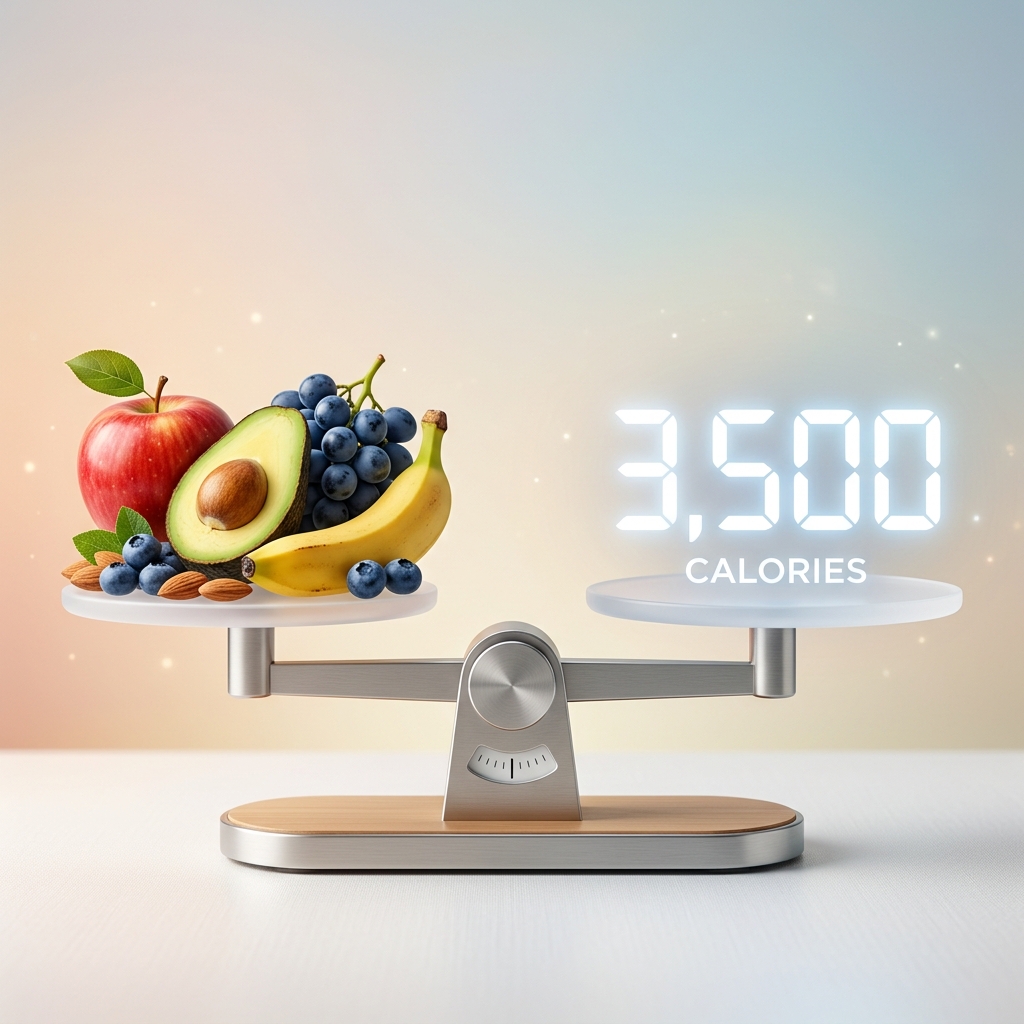
How Many Calories Equal a Pound? The Complete Guide
Wondering how many calories equal a pound? Learn the science behind the 3,500-calorie rule and how to convert calories to lbs for weight loss.
Wondering how many calories equal a pound? Use our free calories to lbs calculator to instantly convert calories to pounds. Whether you want to lose weight, gain muscle, or understand the science behind calories and body weight, CalToLbs has you covered.
Instantly convert calories to pounds of body fat, calculate calorie deficits, and plan your fitness goals.
Input your planned daily calorie deficit to see time-based weight loss projections.
Direct Conversion Equivalent
Loss Per Week
1.00 lbs
Loss Per Month
4.33 lbs
Time to Lose 10 lbs
70 Days
*Conversion calculations are based on the standard biological approximation that 1 pound of body fat contains approximately 3,500 calories of energy.
Type in your daily calorie surplus or deficit. Our calories to lbs converter accepts any calorie amount.
We use the scientifically established ratio: 3,500 calories equals approximately 1 pound of body fat.
See your projected weight change over days, weeks, and months. Use this to plan how many calories to lose 1 lb, 2 lbs, or 10 lbs.
Wishnofsky's Rule & The First Law of Thermodynamics
Weight change is governed by biological energy balance. According to Wishnofsky's Rule, approximately 3,500 calories of energy deficit or surplus equates to one pound of stored adipose tissue (body fat). This is an application of the First Law of Thermodynamics: energy cannot be created or destroyed, only stored as fat or burned for metabolic work.
Adjust the slider to see how chemical energy converts to physical body fat mass according to thermodynamics.
3,500 kcal
Energy In1.00 lbs
Fat StoredAt 3,500 kcal of surplus energy, your fat cells store exactly 1.00 pound of body fat.
To lose weight, you must create a Calorie Deficit (negative energy balance) where your intake is below your Total Daily Energy Expenditure (TDEE). Conversely, muscle building or weight gain requires a Calorie Surplus (positive energy balance). Our converter helps you map these energy targets directly to pounds of body mass.
Adjust your TDEE and daily intake to visualize calorie balance states and the physiological processes involved.
Your calorie intake is below your TDEE. Your body metabolizes stored triglyceride lipids from adipose tissue to satisfy its energy needs.
Net Energy Change
-500 kcal/day
Weekly Mass Change
-1.00 lbs
Select a target weight and daily calorie deficit to map your progress milestones along a biological timeline.
Total Deficit Required
35,000 kcal
Days to Achieve
70 Days
Expected Target Date
September 5, 2026
Quick reference showing how many calories convert to pounds of body fat.
| Calories | Pounds | Weekly Deficit | Monthly Loss |
|---|---|---|---|
| 3,500 | 1 lb | 500 cal/day | ~4 lbs |
| 7,000 | 2 lbs | 1,000 cal/day | ~8 lbs |
| 10,500 | 3 lbs | 1,500 cal/day | ~12 lbs |
| 35,000 | 10 lbs | 5,000 cal/week | ~4-5 lbs |
Wondering how many calories equal a pound? Learn the science behind the 3,500-calorie rule and how to convert calories to lbs for weight loss.
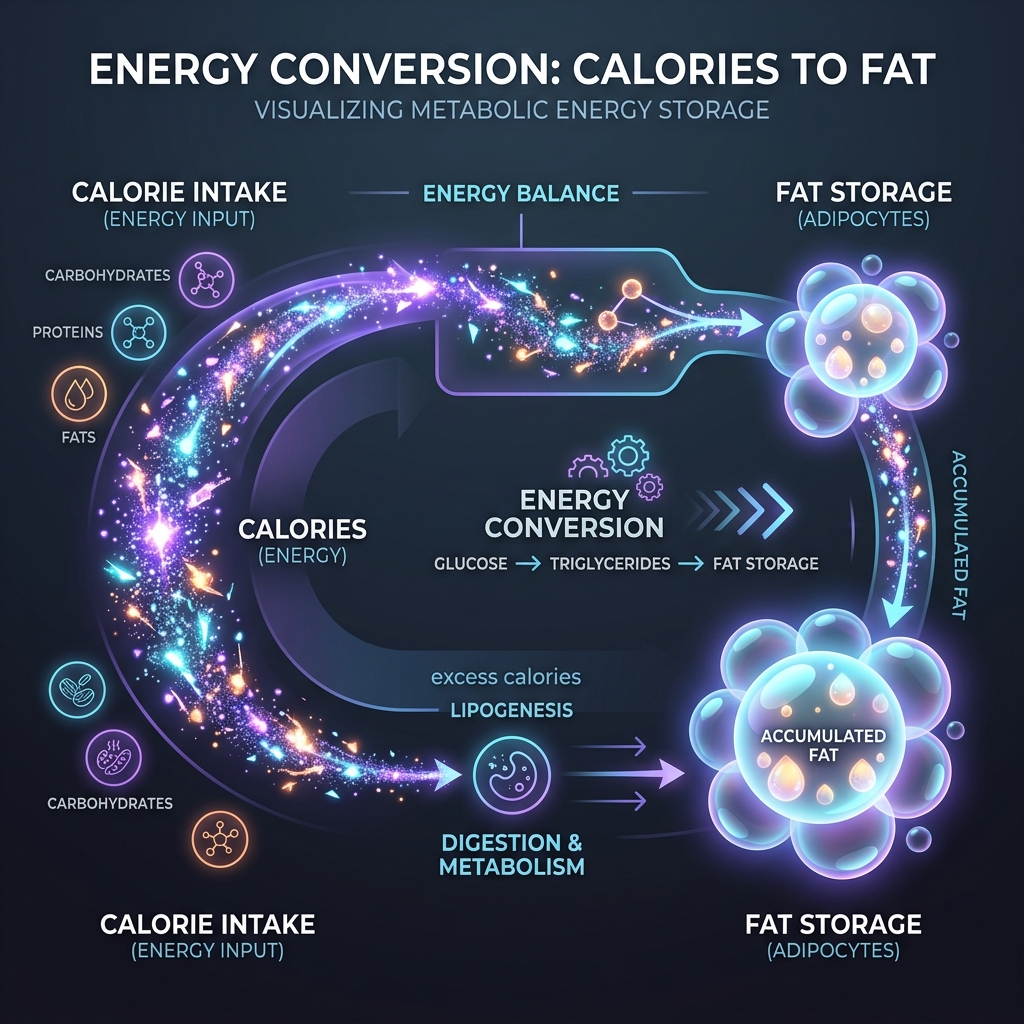
Explore the biological process of how calories convert to pounds of fat and why the 3,500-calorie rule is a helpful approximation.

Learn how to calculate the calorie deficit required to lose 1, 1.5, or 2 pounds per week safely and sustainably.
Choose any of our 23 specialized calorie-deficit and weight loss calculators to test them in real-time, right here.
Choose from our suite of 23 custom calculators to get personalized, scientifically backed fat loss projections tailored to your body, diet, and activity.
Convert calories to pounds and vice versa using thermodynamic standards.
Convert any calorie deficit/surplus directly to body fat.
Plan weekly goals and convert weekly deficit to lbs.
Track weight loss projections over monthly milestones.
See daily, weekly, and monthly fat loss values.
Calculate calories needed to lose specific pounds.
Account for your personal metabolic rate, age, height, and activity level.
Calculate fat loss relative to your Basal Metabolic Rate.
Find your true maintenance burn and deficit projections.
Track changes in fat mass vs lean body mass.
Adjust calorie deficit projections for age-related changes.
Incorporate biological sex metabolic variance.
Factor height and BMI status into weight loss.
See how different daily movement levels impact weight.
Analyze fat loss projections based on your dietary styles and macros.
Determine weight loss from clean eating or portion control.
Convert protein, carb, and fat grams to fat loss.
Calculate Ketogenic fat loss with water weight shifts.
Project weight loss using time-restricted eating windows.
Sum up your meals and snacks to see weight changes.
Find maintenance levels and deficit thresholds.
Track net intake (Food Eaten minus Exercise Burned).
Calculate energy expenditure and calorie deficit from workouts.
Convert workout energy cost directly to pounds lost.
Project fat loss from daily step counts or walks.
Convert running mileage and pace to weight loss.
Find the required daily deficit to reach a weight by a date.
Common questions about converting calories to pounds.